Geometric Mirrors for Living Rooms: Placement & Styling Tips
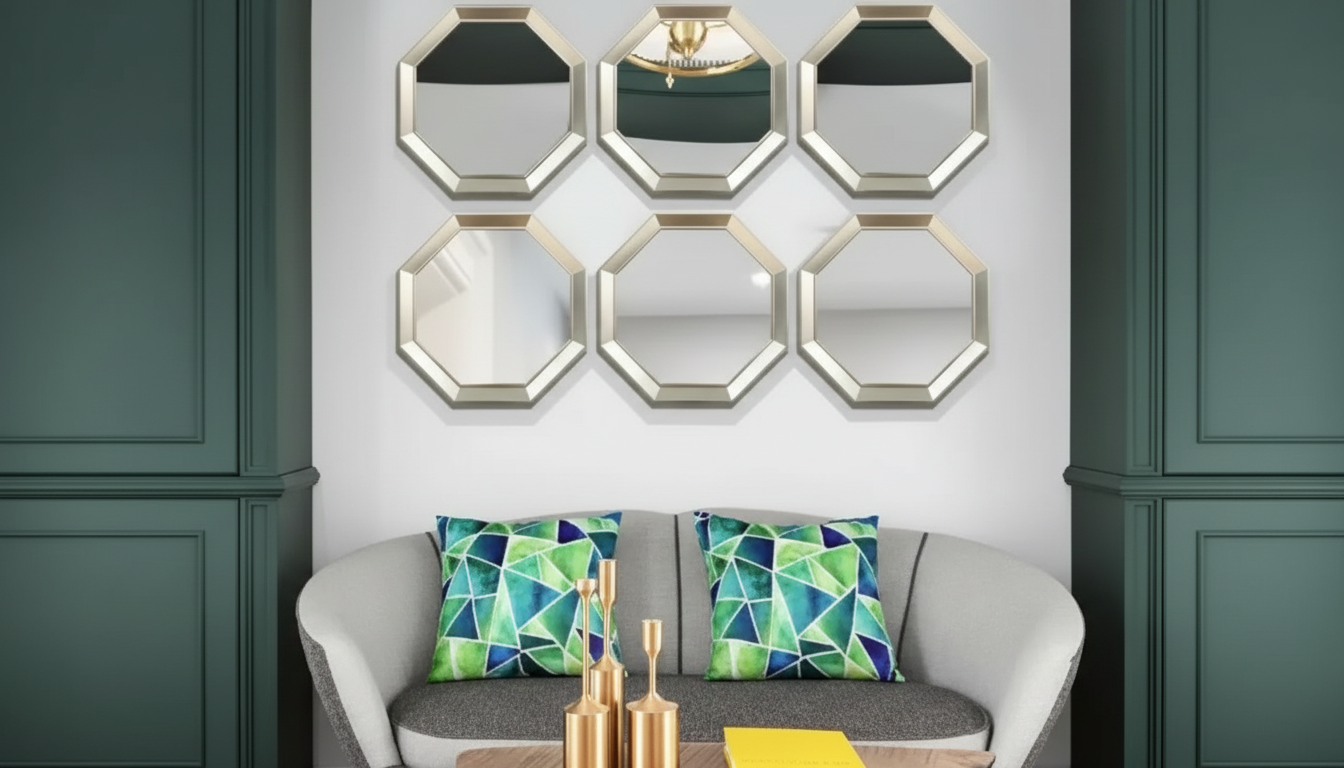
Geometric Wall Hanging Decorative Mirrors for Living Room Décor: A Modern Statement That Brightens the Room
Geometric wall mirrors bring structure, shine, and instant polish to a living room. Their crisp lines help define a space the way artwork does, while the reflective surface bounces light into dim corners and makes tight layouts feel more open. Whether you want a bold focal point above a sofa or a refined accent over a console, the key is choosing the right proportions, placing it at the right height, and styling it so it feels intentional—not random.
What Makes Geometric Mirrors Stand Out in a Living Room
Geometric mirrors have an architectural quality that reads as modern without feeling cold. Repeating shapes and clean angles naturally complement minimalist, contemporary, glam, and transitional interiors.
- Brightening power: Mirrors redirect daylight and lamplight, helping darker rooms feel more lively.
- More depth than a flat mirror: Multi-panel and faceted designs add texture—almost like dimensional wall art.
- Instant focal point: A geometric mirror can anchor a seating area or entry-side living room moment as effectively as a framed print.
Where to Hang One for the Best Visual Impact
Placement matters as much as the mirror itself. A great mirror can look “off” when it’s too high, too small, or competing with other statement pieces.
Above a console table
Center the mirror about 6–8 inches above the tabletop and keep the overall width close to two-thirds of the console width. This creates a balanced vertical stack that feels designed rather than floating.
Behind or near seating
Above a sofa, a geometric mirror becomes a strong focal point. Keep the bottom edge comfortably above head height when seated, and avoid pairing it with overly busy gallery walls that steal attention.
Opposite a window (with control)
Mirrors facing windows can flood the room with reflected daylight. If glare becomes an issue, adjust the height slightly or angle the mirror so it reflects brightness rather than direct sun.
In a narrow living room
Hanging a mirror on the longer wall can visually widen the room. It creates a “second view” that tricks the eye into reading more depth and breadth.
Over a mantel
Align the mirror to the mantel centerline and keep the proportions balanced with surrounding décor. Mantels already act like stages, so the mirror should feel like the lead performer—not a background prop.
Choosing the Right Size and Shape for the Wall
Geometric mirrors look best when their scale matches the wall’s negative space. Too small reads like an afterthought; too large can overwhelm nearby furniture lines.
Quick Placement and Proportion Guide
| Spot | Recommended mirror width | Bottom-edge height guideline | Styling note |
|---|---|---|---|
| Above console table | About 2/3 of console width | 6–8 in above tabletop | Add a tray, vase, or lamp below for layered height |
| Above sofa | About 2/3 to 3/4 of sofa width | 8–12 in above sofa back | Keep surrounding frames minimal so the mirror stays the focal point |
| Over mantel | About 2/3 of mantel width | 2–6 in above mantel surface | Balance with tall candlesticks or a single sculptural object |
| Between windows | Narrow to medium, matching the gap | Centered between trim lines | Great for reflecting light without adding clutter |
Styling Ideas by Living Room Theme
Pairing With Lighting to Enhance Reflection (Without Glare)
- Choose warm bulbs: Around 2700K–3000K creates a comfortable glow when reflected (Energy-saving lighting guidance from Energy Star can help you compare efficient options).
- Place lamps diagonally: A floor lamp or table lamp across from the mirror adds depth and reduces hotspot glare.
- Avoid TV alignment: Don’t position the mirror to reflect a TV screen—moving images become visual noise.
- Tune the window reflection: If it faces a window, adjust height or angle slightly so it reflects brightness, not direct sun in the eyes.
Mounting and Wall Considerations
- Match anchors to the wall type: Drywall, plaster, and masonry need different solutions (see InterNACHI’s overview of types of wall anchors).
- Use studs when possible: For heavier mirrors, anchoring into studs adds confidence and longevity.
- Leveling matters more: Even slight tilts are obvious with angular designs; measure from the floor and adjacent trim lines.
- Safety in shared spaces: If mounting near consoles or tall furniture, keep the area stable and uncluttered; the CPSC offers practical tips on preventing tip-overs.
Care and Cleaning for a Clear, Streak-Free Finish
Featured Picks for a Geometric Statement Wall
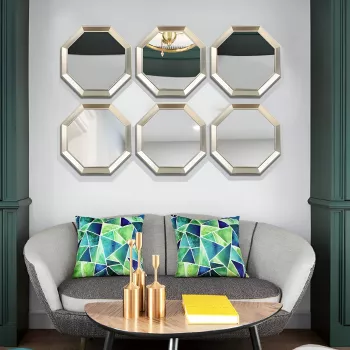
- Geometric Wall Hanging Decorative Mirrors for Living Room Décor — a striking option above a console, sofa, or mantel, especially when you leave a little “breathing room” around it.
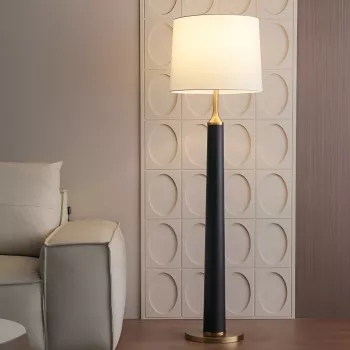
- Wabi-Sabi Copper Marble Wall Lamp – Zen Style Lighting for Bedroom & Corridor — a warm, sculptural lighting companion that can enhance reflections and add a calm, curated glow nearby.
FAQ
How high should a decorative wall mirror be hung in a living room?
Aim for the mirror’s center to land around eye level (about 57–60 inches from the floor), then adjust based on furniture placement. A common guideline is 6–12 inches above a console, sofa back, or mantel surface so it looks connected to what’s below.
Should a living room mirror face a window?
Yes, it can brighten the room by reflecting daylight, but it’s best to avoid direct glare by adjusting height or angle. Also consider what the mirror reflects so the “second view” feels intentional and attractive.
How do geometric mirrors work with other wall décor?
Treat the mirror as the primary focal point and keep nearby frames simpler. Matching finishes (like black, brass, or chrome) and keeping spacing consistent helps everything feel coordinated rather than cluttered.









Leave a comment