Infinity Modular Cat Tree Tower: Setup, Stability & Care
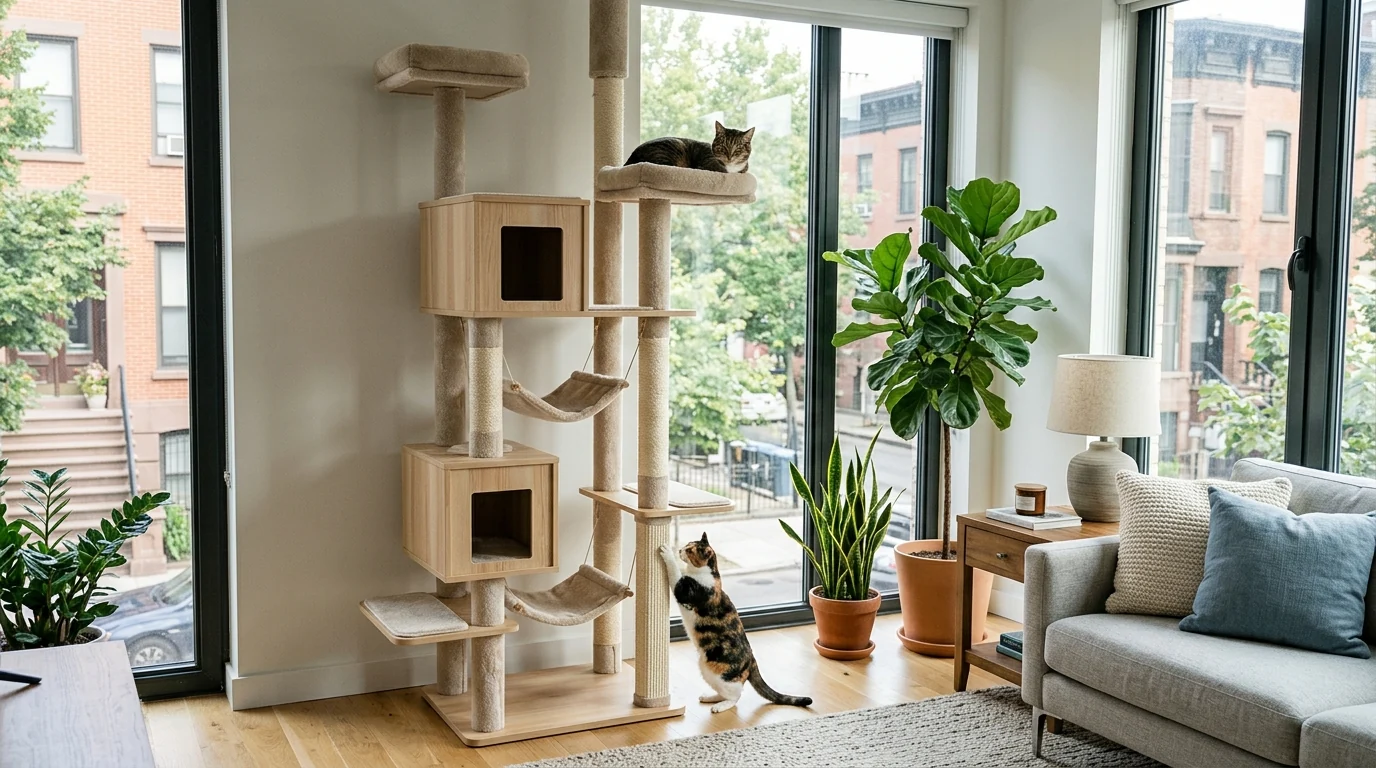
Infinity Modular Cat Tree Tower: A Smarter Way to Build Vertical Cat Space
A modular cat tower can transform vertical space into a daily routine of climbing, scratching, resting, and observation—especially in multi-cat homes or apartments where floor space is limited. This guide explains what an infinity-style modular tower adds to your home, how to configure it for stable “traffic flow,” and how to keep it clean and sturdy so cats continue to choose it year after year.
What a Modular Cat Tower Adds to Daily Life
Cats experience a home in three dimensions. A tall, well-configured tower expands usable territory without taking over the room.
- Vertical territory and confidence: Elevated perches offer clear sightlines, which can help cats feel more secure—especially in busy households.
- Scratch-first alternatives: Dedicated scratch zones placed where your cat already passes through can reduce furniture scratching by offering a better option in the right spot.
- Multiple “stations” for natural behavior: Climb, perch, nap, repeat—cats thrive with predictable places to pause between bursts of play.
- Space-efficient enrichment: A vertical layout can provide more “cat real estate” than a single floor bed, particularly in small homes.
- Better multi-cat dynamics: Separate routes and resting spots reduce bottlenecks and help cats avoid unwanted close contact.
For more on environmental enrichment and why it matters, see guidance from International Cat Care and the ASPCA’s cat care resources.
Infinity-Style Modularity: How the Pieces Work Together
The most successful towers aren’t just tall—they’re easy to navigate. Modular design lets you tune the layout to your cat’s preferences and your room’s constraints.
- Adapt the tower to the room: Align platforms to a window, build staggered steps, or cluster levels into a compact vertical stack.
- Prioritize a usable “path”: Cats typically prefer predictable hops with stable landing zones more than a single dramatic leap.
- Mix functions across levels: Place scratching zones near the base, transition platforms mid-height, and higher perches for resting and observation.
- Place by personality: Social cats may use a perch near family activity; cautious cats often prefer quieter corners with a clear escape route.
- Reconfigure as life changes: Modularity helps when a kitten grows, a senior needs shorter gaps, or a cat avoids one level and needs a different approach.
Modular setup ideas by household need
| Household situation | Suggested layout approach | Placement tip |
|---|---|---|
| Single cat, high energy | Stagger levels into a climb-and-leap route with a high perch | Face a top platform toward a window or open room view |
| Two or more cats | Create two routes up and down to prevent blocking | Leave clear “passing” platforms where cats can pause without conflict |
| Senior cat | Shorten the vertical gaps; add wider resting platforms | Position near favorite sleeping area to encourage use without big jumps |
| Apartment/small room | Compact vertical stack with a stable base and 1–2 generous perches | Place so cats can jump on/off without hitting furniture edges |
Sizing, Capacity, and Stability Checks
A modular tower should feel solid underfoot. If it wobbles, many cats will avoid it—or use only the lowest levels.
- Measure ceiling height and footprint: Leave comfortable clearance above the top level and ensure cats can jump between platforms without awkward angles.
- Match platform size to cat size: Larger cats need broader perches; enthusiastic jumpers benefit from non-slip surfaces and extra-stable transitions.
- Balance weight distribution: Avoid placing multiple heavy perches on one side without counter-support.
- Plan for shared use: In multi-cat homes, include at least one “escape route” so a cat can descend without squeezing past another cat on a narrow ledge.
- Re-tighten after break-in: On carpet in particular, check for wobble and re-tighten hardware after the first week.
Where to Place It for Maximum Use
Even the best tower gets ignored if it’s tucked into an inconvenient corner. Placement should support daily routines: watching, resting, and moving through the home.
- Near a window: This encourages observation and can increase daily use without any extra “training.”
- Near a social area: Many cats like to perch where people spend time, especially if they enjoy interaction.
- Avoid tight dead-ends: Leave room for cats to jump off in more than one direction to reduce tension in multi-cat spaces.
- Keep away from hazards: Avoid heaters, unstable shelves, or door swing paths that could startle a cat or hit the tower.
- Use nearby “helper steps”: A sofa arm or low shelf can serve as a first step for kittens or seniors.
Encouraging Cats to Use the Tower
The goal is to make the tower feel like the easiest, most rewarding place to be—without forcing interaction.
Care, Cleaning, and Long-Term Maintenance
For general pet safety and care guidance, the American Veterinary Medical Association (AVMA) offers helpful owner resources.
Quick Buying Checklist Before Ordering
Featured picks (in stock)
- Infinity Modular Cat Tree Tower — a modular, vertical solution designed for flexible layouts.
- Wabi-Sabi Copper Marble Wall Lamp – Zen Style Lighting for Bedroom & Corridor — a warm lighting option for cozy reading corners (and calmer cat perches nearby).
FAQ
How tall should a modular cat tower be?
Choose a height that fits your ceiling clearance and your cat’s comfort with jumping. A route with smaller, predictable hops often matters more than maximum height, but including at least one higher perch can satisfy cats that like to observe from above.
Is a modular tower better for multiple cats?
It can be, especially when configured with more than one way up and down. Multiple resting spots and “passing” platforms help reduce guarding and crowding.
How can wobbling be reduced after setup?
Place the tower on a flat surface and tighten all fasteners after the first few days of use. Rebalance the layout so heavier platforms aren’t all on one side, and if it sits on carpet, recheck stability more often.














Leave a comment