Voice-Control Heated Wrist Massager: EMS + Hot Compress

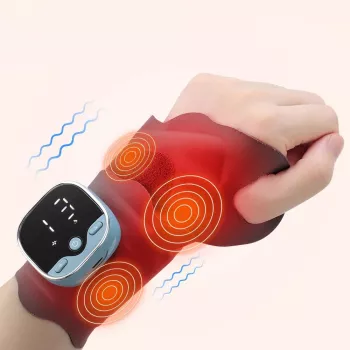
Smart Voice Heated Wrist Massager with EMS & Hot Compress Support
Daily typing, lifting, crafting, and phone scrolling can leave wrists feeling tight and overworked. A compact wrist massager that combines warmth, gentle compression, and EMS stimulation can help support short recovery breaks, improve comfort after repetitive tasks, and make relaxation easier to fit into a busy routine—especially when controls are simple enough to use one-handed.
What This Wrist Massager Is Designed to Do
This type of wrist comfort device is built for everyday overuse—those “my wrist feels stiff” moments after long stretches of keyboard time, gaming, knitting, or manual work. By combining heat, EMS-style stimulation, and a compress-like wrap, it’s intended to support soothing relief and help the area feel more relaxed during downtime.
- Supports comfort for tired wrists through heat, EMS stimulation, and compress-style support.
- Aims to reduce the tight, stiff feeling that can follow repetitive motion.
- Encourages quick, consistent breaks with sessions that are easy to start.
- Made for at-home comfort sessions—not as a replacement for diagnosis or rehab when injury is suspected.
- Works best alongside rest breaks, gentle stretching, and ergonomic tweaks.
How the Key Features Work Together
Heated support + hot compress feel
Warmth is often associated with relaxation and can make the wrist area feel more comfortable during rest. A hot-compress style design focuses on a steady, enveloping warmth rather than a small “spot heat” sensation, which many people find more soothing during short breaks.
EMS stimulation for a gentle “wake up” sensation
EMS uses mild electrical pulses intended to stimulate muscles around the wrist and forearm. The sensation is commonly described as light tapping or pulsing. Used conservatively, it can feel like a brief reset after repetitive use—especially when the goal is comfort, not intensity.
Combined modes for quick recovery breaks
Some users prefer heat alone; others enjoy the pulsing feel of EMS. For many, heat plus EMS feels more effective than either feature on its own when the wrist feels both tight and fatigued. Comfort is personal, so the most useful setting is the one that feels calming rather than strong.
Smart voice control for easier adjustments
Voice control can be a meaningful convenience when one wrist is sore or when pressing small buttons feels awkward. It can also help keep sessions consistent by making it easier to adjust intensity without taking the device off.
Who It’s For (and Who Should Skip It)
This style of massager is a practical fit for people who use their hands all day and want a simple way to build micro-breaks into their routine.
- Good fit for: office workers, students, gamers, makers/crafters, warehouse staff, and anyone managing everyday overuse.
- Useful for: post-activity relaxation, winding down at night, and building a consistent self-care habit.
- May not be appropriate for: people with implanted electrical devices (such as pacemakers), certain heart conditions, pregnancy (seek medical guidance), or known sensitivity to electrical stimulation.
- Avoid use on: broken skin, areas with acute swelling from a recent injury, or when pain is severe, sudden, or unexplained.
- If numbness, tingling, weakness, or signs of nerve compression persist, a clinician evaluation is recommended.
For background on nerve-related wrist symptoms, see the Mayo Clinic overview of carpal tunnel syndrome.
Comfort, Fit, and Day-to-Day Use
Getting a relaxing experience usually comes down to starting gently and keeping sessions short enough to feel refreshing rather than overwhelming.
Controls and Smart Voice Convenience
Safety and Best Practices
For general context on hand and wrist discomfort, the NIAMS hand and wrist pain resource is a helpful reference.
Quick Comparison: Heat vs. EMS vs. Combined Modes
Mode Guide for Common Situations
| Situation | Recommended Mode | Intensity Tip | When to Avoid |
|---|---|---|---|
| After long typing or gaming | Heat + EMS | Start EMS low; moderate heat | If numbness/tingling worsens |
| Pre-bed relaxation | Heat | Keep warmth comfortable, not hot | Do not use while sleeping |
| Post-workout grip fatigue | EMS or Heat + EMS | Use brief sessions; increase gradually | If acute swelling from recent injury |
| Sensitive skin day | EMS (low) or Heat (low) | Choose the gentlest setting | If irritation or redness appears |
What to Look For in a Wrist Massager Like This
Product Snapshot and Value
If you want a compact comfort tool for day-to-day wrist fatigue, the Smart Voice Heated Wrist Massager with EMS & Hot Compress Support combines warmth, compress-style support, and EMS in a simple at-home format. It’s designed to make short relief sessions easy to start and straightforward to adjust—especially helpful when you want a quick reset between tasks.
To build a more complete “break routine,” pairing wrist downtime with a warm drink can make the habit easier to stick with; the Korean 304 Stainless Steel Double Wall Mug 6oz is a small, practical option for coffee or tea during a screen break. For a calmer wind-down environment, soft lighting can help signal rest time, and the Wabi-Sabi Copper Marble Wall Lamp – Zen Style Lighting for Bedroom & Corridor fits a relaxation-focused space.
FAQ
Is EMS the same as TENS, and what does it feel like?
They’re related but not identical: EMS is generally intended to stimulate muscles, while TENS is commonly used for pain-focused nerve stimulation. EMS often feels like gentle pulsing or tapping; start on the lowest level and stop if you feel pain or skin irritation.
How long should a heat and EMS session be for wrist comfort?
Short sessions are usually the most comfortable—follow the device’s guidance and allow breaks between sessions if the area feels tender. Avoid using heated devices while sleeping.
Can a heated wrist massager help with carpal tunnel symptoms?
It may provide temporary comfort for some people, but it won’t correct underlying nerve compression. If numbness, tingling, weakness, or nighttime symptoms continue, a professional evaluation is the safest next step.













Leave a comment